Going Under the Sea at the Shedd Aquarium
· Updated · BootsnAll
 The Shedd Aquarium opened on May 30, 1930, as the first inland aquarium with a permanent saltwater collection, and getting the salt water to Chicago was half the job. To fill the saltwater tanks, 20 railroad tank cars made eight round trips to Key West and hauled back a million gallons of seawater. Fish came by a custom rail car called the Nautilus. The aquarium was a gift to the city from John G. Shedd, a retail executive and protégé of Marshall Field, and it was once the largest indoor aquarium in the world. The building, an octagon with Doric columns and sea creatures worked into the details inside and out, has been a National Historic Landmark since 1987.
Today it holds about 32,000 animals from some 1,500 species. It's the museum kids ask for, and it's also the most expensive one in town, so it pays to plan.
The Abbott Oceanarium
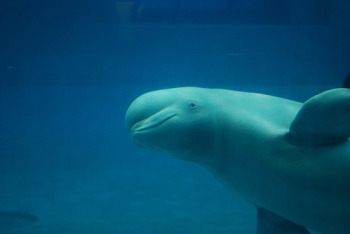
This is the part adults remember. The Oceanarium, added on the lake side of the original building, is the largest indoor marine mammal facility in the world, and its back wall is glass, so the pools seem to run straight into Lake Michigan. It's home to beluga whales, Pacific white-sided dolphins, sea otters and California sea lions. Go downstairs for the underwater windows, where you watch the belugas and dolphins from below the surface.
The beluga group changed a lot in 2026. When Marineland in Niagara Falls, Ontario, closed, Shedd took in ten of its belugas. One died within two weeks of arriving, which is a reminder that the debate over keeping whales in tanks is far from settled. The Oceanarium's amphitheater is also where the aquarium's animal presentations happen, so check the day's schedule when you arrive.
The Polar Play Zone next door is for younger kids, with penguins (rockhoppers and Magellanics), more underwater beluga views and a starfish touch pool.
Wild Reef, Amazon Rising and the rest
Wild Reef, two levels below the main building, recreates a Philippine coral reef in 525,000 gallons of water. It's the shark exhibit, with blacktip reef sharks, zebra sharks and wobbegongs. If you're short on time, do this and the Oceanarium.
Amazon Rising is a walk-through flooded forest with green anacondas, piranhas, electric eels, stingrays and dwarf caimans. Waters of the World, in the original galleries, covers everything from a giant Pacific octopus and seahorses to the lake sturgeon and alligator snapping turtles from closer to home.
The big circular Caribbean Reef tank in the middle of the old building, where a diver used to talk to visitors from inside the water, closed in 2023. Two new tanks took its spot, and the Wonder of Water exhibit opened in December 2024. From May through October you can pet cownose rays at Stingray Touch on the South Terrace, and there's a 4D theater with short films.
One Shedd legend is gone. Granddad, an Australian lungfish who arrived for the 1933 Century of Progress fair, lived at the aquarium until 2017, when he died at about 109, and the Shedd claimed he was the oldest fish in any aquarium in the world.
Tickets
Shedd no longer publishes a single price. Out-of-towners pay plan-ahead, date-based prices, and CityPASS puts general admission at roughly $45 to $55 for adults and $34 to $41 for kids 3 to 11. A summer Saturday sits at the top of that range. Chicago residents pay $19.95. Shedd is a fixed stop on Chicago CityPASS, which adds a 4D film, and for most adults doing the big museums that pass works out cheaper than paying at the door. Our CityPASS vs. Go City comparison has the math. On Go City, Shedd is only on the All-Inclusive Pass.
Illinois residents can get in free. In recent years Shedd has run its resident free days in January and February, then free Tuesday evenings from 5 to 9pm through spring and summer. The dates change each year, so check the discounts and free hours page. Reserve ahead, because free days fill up. Booking online costs $5 per order, and booking by phone at 312-939-2438 (9am to 4pm) is free, according to Chicago Parent. Adults need a photo ID and proof of Illinois residency. Our free museum days page covers the other museums.
Check the hours on the Shedd's website for the day you're going, and go on a weekday if you can, since date-based pricing makes weekdays cheaper and the crowds are thinner.
Getting there
The Shedd is at 1200 S. DuSable Lake Shore Dr., at the north end of the Museum Campus. The #146 bus from State Street and Michigan Avenue stops near the entrance, and the #130 runs to the campus from mid-May through Labor Day. The nearest L stop is Roosevelt (Red, Orange and Green lines), which is a long walk east. In summer, water taxis stop at the Museum Campus dock just north of the aquarium. If you drive, the Soldier Field North Garage costs $27 for up to four hours, and game days and concerts make it worse. The Field Museum is next door, and the Adler Planetarium is a short walk east along the lake, so pick one of them to pair with the Shedd.
Photo by hyku