Chicago in July
· Updated · BootsnAll
 Chicago's summers are short and hot, and by July they're in full swing. This is peak tourist season. There's a street festival nearly every weekend, restaurants have their patios, beer gardens and rooftop decks open, and runners and cyclists take over the Lakefront Trail by 7am. The harbors are full of boats, the beaches are lined with people working on their tans, and the parks are full from morning to dark.
The weather
July is the hottest month of the year. By the National Weather Service's 1991-2020 normals, measured at O'Hare, the average high is 84.5°F and the average low is 66.4°F. Averages hide the heat waves, though. O'Hare averages about 17 days a year at 90°F or above, and humid spells push the heat index well past the thermometer. Nights often stay warm and sticky.
July is a bit drier than June and August, with 3.71 inches of rain on average, but it still gets its share of thunderstorms. They tend to roll in late in the afternoon, loud and fast, and they can clear the beaches and pause outdoor festivals and ballgames. A storm is often the thing that finally breaks a heat wave. Beaches fly the red no-swimming flag when lightning is around, so check the forecast from NWS Chicago before you plan a beach day.
The lake helps. Close to the water it's often a few degrees cooler than in the West Loop or out by O'Hare, and a breeze on the lakefront can make a 90-degree day bearable. Our Chicago weather page has the month-by-month numbers, and ways to beat the heat has ideas for the worst days.
Crowds and hotel prices
July is about as busy as Chicago gets. School's out, families are on the road, and the big events stack up, from the Fourth of July to Taste of Chicago to Lollapalooza, which fills Grant Park for four days in late July or the first days of August. Hotel rates are high, and the weekends with a big festival downtown are the hardest to book. If your dates are flexible, check the city's festival dates page and the Lollapalooza site before you book. Then decide if you want to be in the middle of it or a few days away from it.
Remember the tax. Chicago's combined hotel tax is about 17.5%, and it's higher at big downtown hotels. Our accommodation guide has the details, and where to stay in Chicago and how to save money on your trip can help keep the bill down. Staying near an L line rather than right downtown is one of the easier ways to do that.
What to pack
- Light, breathable clothes. Linen and cotton beat anything synthetic when the humidity's up.
- A swimsuit and a towel you don't mind getting sandy.
- Sunscreen, a hat and sunglasses. Shade is scarce on the lakefront and at the Grant Park festivals.
- A refillable water bottle.
- One long-sleeve layer. Theaters, museums and restaurants run the air conditioning hard, and evenings by the lake can cool off.
- A small umbrella or rain shell for the afternoon storms.
- Comfortable sandals or sneakers that can handle miles of walking.
More in what to wear in Chicago in summer.
What's on
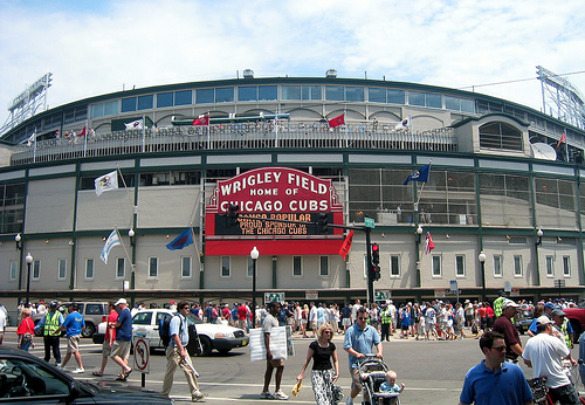
Chicago is fully open for business in July. You can spend the heat at the beaches, the farmers markets, a concert at Ravinia, a Cubs game at Wrigley Field, the street festivals or on a river or lake cruise, then cool off indoors at the theater or the city's museums.
The full rundown of July events, from the fireworks to the sailboat race to Mackinac Island, is on our things to do in Chicago in July page. See also 4th of July in Chicago, Chicago in summer and the holidays and events calendar. If you're weighing a different month, Chicago in June is a little cooler and Chicago in August is nearly as hot.
Photo by Slack-a-gogo