Nightlife
Updated · BootsnAll
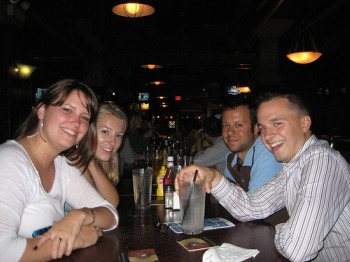 Chicago bars stay open late, the trains run all night on two lines, and most neighborhoods have their own kind of night out. Bars still cluster by style, so pick the area that suits your mood and you can walk from one place to the next. This page covers where to go, what's on stage, and how late things run. For specific bars, see our lists of unique bars in Chicago, rooftop bars and breweries and brewpubs.
If you're working from an older guide, cross off The Violet Hour. The Wicker Park speakeasy closed for good in June 2025, so don't go looking for its unmarked door.
How late Chicago stays open
A regular Chicago tavern license lets a bar serve until 2am, and until 3am on Saturday night. Bars that pay for a late hour license can go to 4am, and 5am on Saturday night. Those are the famous "4am bars," and they're where the night ends for bartenders, cooks and anyone who got a late start. Plenty of places close well before the legal limit, especially on weeknights, so check hours before you commit to a long walk.
Getting home is easier than in most American cities. The CTA's Red and Blue Lines run 24 hours a day, every day. The Red Line covers Wrigleyville, Lakeview, Uptown, River North and the Loop. The Blue Line covers Wicker Park, Logan Square, the West Loop edge and O'Hare. Everything else stops overnight, so after about 1am you're on the Red, the Blue, a night bus or a rideshare. Our transportation guide has the details.
The neighborhoods
River North and the Gold Coast
River North, just north of the river, has the city's biggest concentration of dance clubs, lounges and restaurant bars, and it's where the bottle-service crowd goes. Expect covers, dress codes and steep drink prices. The best reason to go is Three Dots and a Dash, a tiki basement you reach through the alley behind 435 N. Clark St. A few blocks north, the Rush and Division strip in the Gold Coast still earns its old nickname, the Viagra Triangle, for its steakhouse patios full of older men and younger dates. It's good people-watching. If you want to stay close, see our picks for hotels in River North and our guide to Old Town and River North.
West Loop and Fulton Market
The old meatpacking district is now the city's dining capital, and the bars keep pace. This is where you go for serious cocktails with dinner attached. Kumiko, at 630 W. Lake St., won the James Beard Award for Outstanding Bar in 2025 and is open Wednesday to Sunday until midnight. The Aviary, from the Alinea team, is at 955 W. Fulton Market and books through Tock. Randolph Street and Fulton Market are packed on weekends, and a table anywhere good needs a reservation. Clinton on the Green and Pink Lines is the closest stop, and the Blue Line's Clinton station is a few blocks south.
Wicker Park and Bucktown
The Milwaukee, North and Damen intersection is the center of it, with bars, music rooms and late-night food within a few blocks of the Damen Blue Line stop. It's busier and pricier than it was 15 years ago, and a lot of the "dive bars" are new bars dressed as old ones. The real ones still have cheap beer, a screen door and regulars who look like they came with the building. In Bucktown, the Map Room at 1949 N. Hoyne Ave. is a coffeehouse by day and a beer bar by night, with more than two dozen taps and a wall of old National Geographics. Just south in Ukrainian Village, the Empty Bottle (below) is the neighborhood's music room. More in our Bucktown guide.
Logan Square
Logan Square is where much of the city's indie music, natural wine and cocktail energy went when Wicker Park got expensive. Most of it sits along Milwaukee Avenue and around the square itself, near the Logan Square Blue Line stop. Longman & Eagle, 2657 N. Kedzie Ave., is a whiskey bar, restaurant and small inn in one, open until 1am on Fridays and Saturdays, with $2 whiskey shots on Mondays. For something new, Culebra, a Puerto Rican and Caribbean-themed speakeasy, opened in April 2026 in the basement that used to be Golden Teardrops.
Lakeview and Wrigleyville
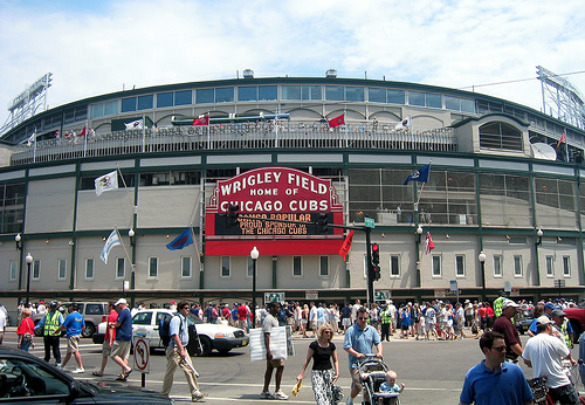
Around Wrigley Field, Clark and Addison is sports-bar country. On Cubs game days and concert nights the bars fill with fans in jerseys and the scene gets loud and messy, like college with better beer. If that's not you, avoid the blocks around the ballpark before and after a game. The best reason to be here on a non-game night is Metro (below) and the dance club downstairs. Further south on Belmont, the old Berlin nightclub space reopened in April 2026 as The Belmont, a cocktail bar, and Decibel, a dance club that runs until 4am. See our guides to Lakeview and eating and drinking near Wrigley Field.
Northalsted
Halsted Street between Belmont and Grace, which many people still call Boystown, is the center of gay nightlife in Chicago, and the bars welcome everyone. Sidetrack, 3349 N. Halsted St., is the big one, with a show-tune night on Mondays and trivia on Tuesdays. It's open until 2am and until 3am on Saturdays. Across the street, Roscoe's at 3356 N. Halsted has been open since 1987 and has a dance floor and a patio. Kit Kat, the drag supper club that bachelorette parties love, has moved to a new space at 3524 N. Halsted St. and now calls itself Kit Kat Club. Book ahead on weekends. Our gay Chicago guide goes deeper, and if you're planning a group night, see our bachelorette party guide.
Andersonville
Clark Street north of Foster is quieter than Halsted, with a smaller cluster of LGBTQ bars, Swedish-rooted shops and good restaurants. Hopleaf, 5148 N. Clark St., has been pouring Belgian and craft beer since 1992 and is known for its mussels and frites. There are no TVs and no live music, and that's the point. It's a walk or a short bus ride from the Berwyn Red Line stop.
Pilsen
Pilsen's bars along 18th Street are more neighborhood than scene, and cheaper than anywhere north of the river. The anchor is Thalia Hall (below). Its sister bar Punch House serves punch bowls and cocktails until 2am on Fridays and Saturdays. The 18th St. Pink Line stop is the closest train, and the station's murals are worth a look on the way.
Uptown
Uptown is for old-school jazz and late nights. The Green Mill is the reason most visitors come, and the Lawrence Red Line stop is a block away, which makes the ride home at 4am easy.
Live music
Chicago's music scene is bigger than blues and jazz, but those are what most visitors come for. Our guide to blues and jazz clubs in Chicago has the full list. These are the rooms we'd start with, and all of them had shows on the calendar in September 2026.
Green Mill. This jazz lounge at 4802 N. Broadway has been open under Dave Jemilo since June 1986, and the room itself dates back to the 1930s. Keep your phone silent and your voice down during sets, or you'll be told to. It's cash only. For its 40th anniversary this year, the club brought back late-night music on weekends. A jam session led by Marquis Hill runs from 1am to 3:30am on Fridays, and the Righteous Rooster organ trio plays 1am to 4am on Saturdays, with a $5 cover after 1am. The Uptown Poetry Slam still runs on Sunday afternoons.
Kingston Mines. Kingston Mines has been playing blues since 1968 and sits at 2548 N. Halsted St. in Lincoln Park. Two stages trade sets all night, so the music barely stops. It's open Thursday to Sunday. On Fridays and Saturdays it runs 7pm to 4am, and the last set on Saturday starts at 3:30am. Discounts are available for students, seniors, military and service workers. It's the place to end up, not the place to start.
Buddy Guy's Legends. Buddy Guy opened Legends in 1989 and moved it to 700 S. Wabash Ave. in the South Loop in 2010. He still plays a month of shows every January, and those sell out. The rest of the year, the free acoustic set at dinner is open to all ages, and the evening show costs $15 Sunday to Thursday and $25 on Fridays and Saturdays, 21 and over. It's closed Monday and Tuesday, and it doesn't take reservations, so arrive early.
Metro. Metro, at 3730 N. Clark St. in Wrigleyville, has been booking rock, punk and indie bands since 1982, and R.E.M. played one of its first shows. It holds about 1,100 people between the floor and the balcony. Smartbar, in the basement, is one of the city's best dance clubs, with DJs until late on weekends. Addison on the Red Line is two blocks away.
Empty Bottle. The Empty Bottle, 1035 N. Western Ave. in Ukrainian Village, is a 400-capacity club that has been in its current spot since 1993. It's the place to catch a band before they get big. Shows are 21 and over. The Western bus runs past the door.
Thalia Hall. Thalia Hall, at 1807 S. Allport St. in Pilsen, was built in 1892 and is a Chicago Landmark. It's a mid-size room with a balcony and a restored interior, and the booking runs from indie rock to comedy. There's food and a bar in the building, so you can eat before the show, and the box office opens with the doors.
Comedy
The Second City. The Second City opened in 1959 and moved to 1616 N. Wells St. in Old Town in 1967. Its alumni list reads like Saturday Night Live's cast list. The Mainstage revue runs most nights, and the e.t.c. Theater and UP Comedy Club are in the same complex, so there's usually more than one show to pick from. The Sedgwick Brown Line stop is a short walk. Afterward, walk over to the Old Town Ale House at 219 W. North Ave., which stays open until 4am (5am on Saturdays).
iO. iO, the improv theater founded in 1981 as ImprovOlympic, closed in 2020, was bought by new owners in 2021, and reopened in November 2022. It's back to shows six nights a week at 1501 N. Kingsbury St., a five-minute walk from the North/Clybourn Red Line stop. It's all ages, with a bar and kitchen, and the house improv teams are where the next Second City cast is learning its trade. For plays and musicals, see our guide to theatre in Chicago.
Photo by Daniel Morrison