Old Town and River North
· Updated · BootsnAll
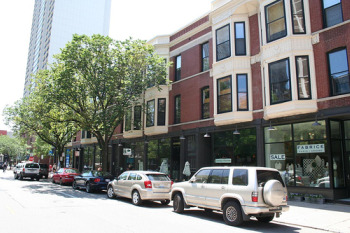 These two neighborhoods sit a mile or so apart on the Near North Side, and they couldn't feel more different. Old Town is brick rowhouses, crooked lanes and a comedy club that changed American TV. River North is glass towers, steakhouses and bottle-service clubs. Both are an easy walk or a short train ride from the Magnificent Mile, and both are good places to spend an evening.
Old Town
Old Town sits just south of Lincoln Park, centered on Wells Street and North Avenue. German immigrants farmed the swampy land here in the 1800s, growing so many cabbages and potatoes that the area was nicknamed "the Cabbage Patch," a name that stuck until the early 1900s. The name Old Town came later, from the neighborhood's art fairs and the Old Town Triangle Association, formed in 1948. By the 1950s the area was home to many Puerto Rican families and a sizable gay community, much of which later moved north to Lakeview. In the 1960s it was the center of Chicago's folk music scene. The Old Town School of Folk Music opened on North Avenue in 1957 before moving north in 1968.
Today Old Town is one of the pricier parts of the city, full of young professionals and families, but the history is still on the street. Many of the lanes in the Old Town Triangle, north of North Avenue, don't follow the city grid, a leftover of the years before the Great Chicago Fire. St. Michael's Church, built by Bavarian immigrants, is one of only seven buildings inside the fire zone to survive. On Crilly Court, the rowhouse where Henry Gerber lived when he started the Society for Human Rights, the country's first gay rights organization, in 1924 is now a National Historic Landmark. It's a private home, so look from the sidewalk. Our gay Chicago guide has the story, and our Great Chicago Fire page explains what burned.
The Sedgwick stop on the Brown and Purple Lines opened in 1900, making it one of the older stations still in use, though it was rebuilt in 2006 and 2007. The Red Line's Clark/Division and North/Clybourn stops are also within walking distance.
Comedy and bars
Most visitors come to Old Town for The Second City, the improv theater that opened in 1959 and moved to 1616 N. Wells St. in 1967. Its alumni fill the history of Saturday Night Live. There's usually more than one show a night across its stages, so book ahead on weekends. Afterward, walk over to the Old Town Ale House, 219 W. North Ave., a longtime neighborhood bar that stays open until 4am, and 5am on Saturdays. iO, the other big improv theater, is a short walk west at 1501 N. Kingsbury St. Our nightlife guide and theatre guide cover both.
Where to eat
Twin Anchors, 1655 N. Sedgwick St., has been serving barbecued ribs since 1932, and it looks like it. It doesn't take reservations for any size group, so put your name in and expect a wait. It opens at 4:30pm on weekdays and at noon on weekends. The Old Town Triangle is also a short walk from the Chicago History Museum at Clark and North, which makes a good afternoon before dinner.
Art fairs
Old Town's big weekend comes in June. The Old Town Art Fair brings more than 200 artists into the Triangle, and the Wells Street Art Festival runs a few blocks away on the same weekend, so you can see both in one afternoon. Old Town also throws an Oktoberfest on Wells Street in September. See neighborhood festivals for more.
River North
River North runs north from the Chicago River to about Chicago Avenue, and west from the Magnificent Mile toward the river's North Branch. Fifty years ago much of it was skid row. In 1974 developer Albert Friedman started buying and restoring old warehouses here, and he came up with the name River North to attract tenants. Photographers, ad agencies and galleries moved in for the cheap space. Towers, hotels and nightclubs followed, and the rents went up. Today it's one of the busiest restaurant and nightlife districts in the city. For hotels, see our picks for hotels in River North.
The Red Line stops at Grand and Chicago, and the Brown and Purple Lines stop at Chicago and at Merchandise Mart. Most of the neighborhood is also a 10- to 15-minute walk from the Loop.
Galleries
River North once had the largest concentration of art galleries in the US outside Manhattan. That's no longer true. Many galleries have closed or moved on, and only a handful remain. The old gallery district is still on Superior and Huron Streets between Wells and Orleans, and it's worth a walk if you like art. Stephen Daiter Gallery, on the fourth floor of 230 W. Superior St., specializes in photography and is open Tuesday to Friday, 11am to 5pm. Gallery hours tend to be short, so check before you go.
The Merchandise Mart
The Merchandise Mart opened on the river in 1930 as the largest building in the world, with 4 million square feet of floor space. It was so big it had its own ZIP code, 60654, until 2008, when the Postal Service gave that code to the surrounding blocks. Some of the design showrooms inside are open to the public.
The best way to see it is from outside at night. Art on the Mart projects digital art across the building's 2.5-acre river facade from spring through late December, for half an hour a night, four nights a week (Thursday to Sunday). Stand on the Riverwalk across the water. It's free, and the start time shifts with the season, so check the schedule on the site. More ideas on our free and cheap things to do page.
Churches, a mansion and a pair of corncobs
Holy Name Cathedral, on the northeast corner of State and Superior, is the seat of the Catholic Archdiocese of Chicago. It was dedicated in 1875 to replace the cathedral lost in the Great Fire. A short walk away, St. James Cathedral, 65 E. Huron St., is the oldest Episcopal congregation in the Chicago area, founded in 1834, in a Gothic Revival church finished in 1857.
A block away, the Driehaus Museum, 50 E. Erie St., fills the 1883 Nickerson Mansion with art and design from the late 19th and early 20th centuries. It's the best look you'll get inside a Gilded Age Chicago home. It's closed Mondays and Tuesdays. Down on the river, the twin round towers of Marina City, designed by Bertrand Goldberg and finished between 1964 and 1968, are the ones people call the corncobs. The best view is from a river architecture boat tour.
Where to eat and drink
River North has more restaurants than we could list, so here are the ones with a story. Frontera Grill, 445 N. Clark St., is where Rick Bayless started in 1987, and it's on Michelin's Bib Gourmand list. Topolobampo, his Michelin-starred tasting room, is in the same building. See our Michelin guide for booking.
For deep dish, Pizzeria Uno, 29 E. Ohio St., says Ike Sewell created the style there in 1943, and it's open 11am to 11pm every day. Gino's East, 162 E. Superior St., is the other old name. Our pizza guide has more. The Portillo's at 100 W. Ontario St. is loud, big and the easiest place in town to try a Chicago dog and an Italian beef in one sitting. See our Chicago-style hot dogs page. For a steak, Gene & Georgetti, 500 N. Franklin St., has been cooking them since 1941.
When it gets dark, River North is where the city's velvet-rope clubs and lounges are, especially around Hubbard Street. Expect covers, dress codes and pricey drinks on Friday and Saturday nights. For a better drink, go to Three Dots and a Dash, the tiki bar you enter from the alley behind 435 N. Clark St. For more, see our nightlife guide and the Gold Coast, Magnificent Mile and Streeterville guide next door.
Photo by darrowwest