Information
Updated · BootsnAll
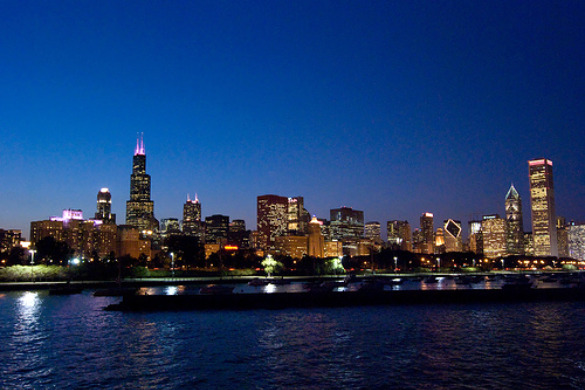
Chicago is the third-largest city in the United States, with 2,746,388 people at the 2020 census and an estimated 2.73 million now (Wikipedia). It's the biggest city in the Midwest, and it sits on the southwest shore of Lake Michigan, which is the one direction you'll never lose track of. The lake is always east.
People still call it the Windy City, the City That Works, the City of Big Shoulders and the Second City, and it's still known for machine politics, the L, brutal winters and deep-dish pizza. It also gets overlooked next to New York, which is New York's loss. You get museums that hold their own against any in the country, a lakefront you can walk or bike for miles, a food scene that runs from Michelin stars to hot dog stands, and neighborhoods that each feel like their own small town.
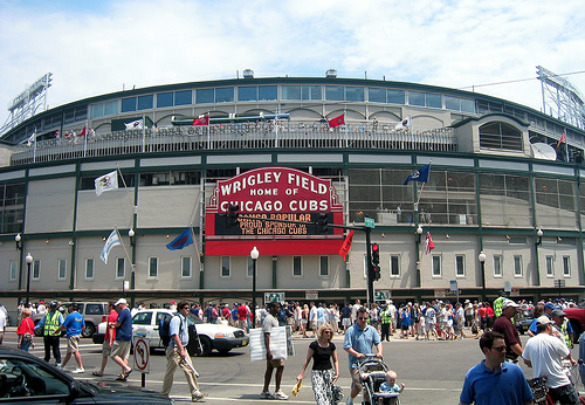
Take an architecture boat tour on the Chicago River. Pick a side in the North Side vs. South Side baseball split at Wrigley Field or Rate Field. Walk the Lakefront Trail, window-shop the Magnificent Mile, visit the free Lincoln Park Zoo, ride the Centennial Wheel at Navy Pier, and say hello to Sue the T. rex at the Field Museum. Then have a drink on a rooftop, find a speakeasy, or bring your own bottle to one of the city's BYOB restaurants. The things to do page has the full list.
What follows is the practical stuff, the things you'd want a friend who lives here to tell you before you land.
City size and layout
The city covers about 234.5 square miles, 6.8 of them water (Wikipedia). The streets run on a grid that counts outward from State and Madison in the Loop, at roughly eight blocks to the mile. Learn that and you'll almost always know where you are. Our map of Chicago page explains how the grid works.
Officially the city has 77 community areas. Locals slice those into a couple of hundred neighborhoods with fuzzy borders, and nobody agrees on exactly where one ends. Visitors spend most of their time in a handful of them.
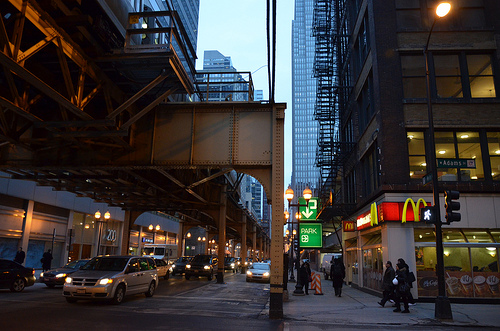
- The Loop is downtown, the business district inside the ring of elevated tracks. Grant Park, Millennium Park and the Art Institute are on its lakefront side, and the Museum Campus is just south.
- Streeterville, the Gold Coast and the Magnificent Mile are just north of the river. Streeterville runs east of Michigan Avenue to the lake, and the Gold Coast, north of it, has some of the city's priciest addresses.
- River North and Old Town hold a lot of the hotels, galleries and restaurants, and Old Town has Second City, the comedy theater.
- Lincoln Park is named for the park along its lakefront, where you'll find the zoo. It's a well-off neighborhood, and DePaul University keeps it lively.
- Lakeview runs roughly from Diversey to Irving Park. Wrigleyville is the part around Wrigley Field, and Northalsted, the stretch of Halsted known for decades as Boystown, is the city's LGBTQ+ nightlife strip (see our gay Chicago page).
- Wicker Park, Bucktown and Logan Square, on the Blue Line northwest of downtown, are where you'll find a lot of the city's independent shops, bars and restaurants.
For where to base yourself, see where to stay in Chicago. For the neighborhoods that are easy to reach on the L, see this guide.
Visas and entry
Most visitors need a U.S. visa. Citizens of the 42 countries in the Visa Waiver Program, including the UK, Ireland, most of the EU, Australia, New Zealand, Japan and South Korea, can come for up to 90 days without one. But they must get an approved ESTA online before they fly. The fee is now $40.27 (Wikipedia). Only apply through the official CBP site. Plenty of lookalike sites charge far more for the same form. Canadians generally don't need a visa or an ESTA for a tourist trip.
If you need help from your own government while you're here, many countries have a consulate in Chicago. See our list of consulates in Chicago.
Money and taxes
The currency is the U.S. dollar. Cards, including contactless, work almost everywhere, and you can tap a card or phone to ride the L (see transportation).
Prices on menus and shelves don't include tax, and Chicago's tax is high. The combined sales tax rose to 10.5% on August 1, 2026, when the regional transit share in Cook County went from 1% to 1.25% (Illinois Department of Revenue). That's 6.25% for the state, 1.75% for Cook County, 1.25% for the city and 1.25% for transit. Restaurants and bars inside a large downtown district, roughly from Diversey south to the Stevenson Expressway and from Ashland east to the lake, including Navy Pier, add another 1% food and beverage tax (IDOR). The same tax applies around Midway Airport. Chicago also charges its own tax on bottled water and on checkout bags.
Hotel tax is the one that stings. The combined state, county and city rate was already 17.5%. In March 2026 the City Council created a Tourism Improvement District and added a 1.5% charge at hotels with 100 or more rooms downtown, near McCormick Place, in the Illinois Medical District and in Hyde Park. That took the rate there to 19%, the highest in the country (Sun-Times, City of Chicago). Vacation rentals pay a separate 6% city surcharge on top of the 4.5% city hotel tax. Factor all of that in when you compare room rates, and see how to budget for a trip to Chicago.
Tipping
Tipping here works the way it does in the rest of the U.S. At a sit-down restaurant, 18 to 20% of the pre-tax bill is normal, a bit more for great service. Bartenders get a dollar or two a drink, or about 20% of the tab. Taxi and rideshare drivers get 15 to 20%, hotel bellhops a few dollars a bag, and housekeeping a few dollars a night, left daily since the person cleaning can change. Check the bill before you add anything, because some restaurants add a service charge, especially for larger groups.
Chicago's restaurant servers do earn more than the old federal tipped wage. The city's tipped minimum wage is $12.96 an hour, against a regular minimum of $17.05, as of July 1, 2026 (City of Chicago). That's still well short of a living wage here, and tips still make up a big part of what servers take home.
Safety
Chicago's reputation for crime is bigger than the risk most visitors face. Violent crime is concentrated in a small number of neighborhoods away from where tourists spend their time, and it has been falling. The city counted 417 homicides in 2025, down from 587 the year before (Wikipedia, from the city's Violence Reduction Dashboard, which you can check by neighborhood).
Use the same sense you'd use in any big city. Keep your phone in your hand or your pocket, not on the café table or sticking out of a back pocket on the train. Stick to busy streets late at night. On the L late at night, ride in the first car, where the operator is, and move cars if someone is bothering you. Downtown and the lakefront get very crowded on summer holiday weekends. That's when you're most likely to have your pocket picked.
In an emergency, call 911. For anything else, like a noise complaint or a broken streetlight, call 311 or use the CHI311 site. The Chicago Police Department posts district contacts and alerts.
Smoking and cannabis
The Smoke Free Illinois Act has banned smoking inside bars, restaurants, casinos and most other indoor public places since 2008, and within 15 feet of their doors and windows. Since 2024 the ban covers e-cigarettes and vapes too (Wikipedia). Most hotel rooms are non-smoking, so if you smoke, ask when you book. You have to be 21 to buy tobacco or vapes in Illinois.
Recreational cannabis has been legal in Illinois since January 1, 2020. Anyone 21 or older with ID can buy at a licensed dispensary, and there are more than 100 in the state (State of Illinois). Visitors can now carry the same amount as residents: 30 grams of flower, 500 milligrams of THC in edibles and 5 grams of concentrate.
Where you can't use it trips up plenty of visitors. It's illegal in any public place, which covers streets, parks, beaches and the lakefront. It's also banned in cars, even parked ones, near anyone under 21 and on federal property, and the state's FAQ spells out the rest. Most hotels ban smoking anything in the rooms. So in practice that means a private home, or an edible. In the car, keep it sealed in the original packaging, and don't take it out of state. Driving high is a DUI.
Drinking
The drinking age is 21, and bars and liquor stores check ID, so bring your passport or driver's license. A standard bar license runs until 2am, or 3am on Saturday nights. Late-hour bars stay open until 4am, or 5am on Saturday nights. Our nightlife page has the details and where to go.
Time zone
Chicago is on Central Time, UTC-6, and UTC-5 during daylight saving time, which runs from the second Sunday in March to the first Sunday in November. That puts it an hour behind New York and two ahead of Los Angeles.
Language
English is the main language. Spanish is widely spoken, especially in Pilsen and Little Village, and you'll hear plenty of Polish, Chinese and, along Devon Avenue, Hindi and Urdu.
Phones and Wi-Fi
Chicago's area codes are 312 (downtown), 773 (the rest of the city) and 872, which overlays both (Wikipedia). Dial all ten digits for local calls. From abroad, dial your exit code, then 1, then the ten-digit number.
If your phone is unlocked, a U.S. prepaid SIM or an eSIM bought before you arrive is usually far cheaper than roaming. Most hotels and coffee shops have free Wi-Fi.
Electricity
The U.S. runs on 120 volts at 60 Hz. Plugs have two flat parallel pins, sometimes with a round grounding pin below them. Most phone and laptop chargers handle both voltages, so you'll only need a plug adapter. Hair dryers and straighteners from 230-volt countries need a converter or they'll burn out.
Visitor information
Choose Chicago, the city's tourism office, publishes a free visitors guide you can read online or have mailed, plus a list of visitor information partners. Its free Chicago Greeter program pairs you with a volunteer who'll show you a neighborhood of your choice, in more than a dozen languages, for two to four hours. Book ahead. The walk-up InstaGreeter tours of the Loop leave from the Chicago Cultural Center (77 E. Randolph St.) at 11:30am and 1:30pm on Fridays, Saturdays and Sundays, no booking needed.
For discounted attraction entry, see our pages on city passes and free museum days.
Accessibility
Every CTA bus and train car is accessible, and 110 of the 146 L stations have elevators or ramps. The rest are being upgraded under the CTA's All Stations Accessibility Program (CTA). Elevators do break down, so check the CTA's elevator status page before you set off. Choose Chicago keeps an accessibility guide covering the airports, museums, theaters and Millennium Park, along with sensory-friendly attractions. The downtown grid is flat, which helps. Winter snow and ice on the curb cuts don't.
Weather
Chicago gets real winters and hot, humid summers, and a wind off the lake can leave the shore noticeably cooler than the neighborhoods inland. Our weather page has the month-by-month numbers, and there are packing guides for winter, spring, summer and fall.
Nicknames
You'll hear the Windy City, the Second City, the City That Works and the City of Big Shoulders, the last one from Carl Sandburg's 1914 poem "Chicago." Visitors say Chi-town. Locals mostly don't.
The Chicago flag
You'll see the Chicago flag everywhere: on bars, T-shirts, tattoos and plenty of front porches. It's two light blue stripes on white with four red six-pointed stars. The flag was adopted in 1917 with two stars, for the Great Chicago Fire and the 1893 World's Columbian Exposition. The third star was added in 1933 for the Century of Progress fair, and the fourth in 1939 for Fort Dearborn (Wikipedia).
Getting here and around
See getting to Chicago, flights to Chicago, airports and transportation. If you're planning a longer trip, there's also why you should add Chicago to a round-the-world trip.